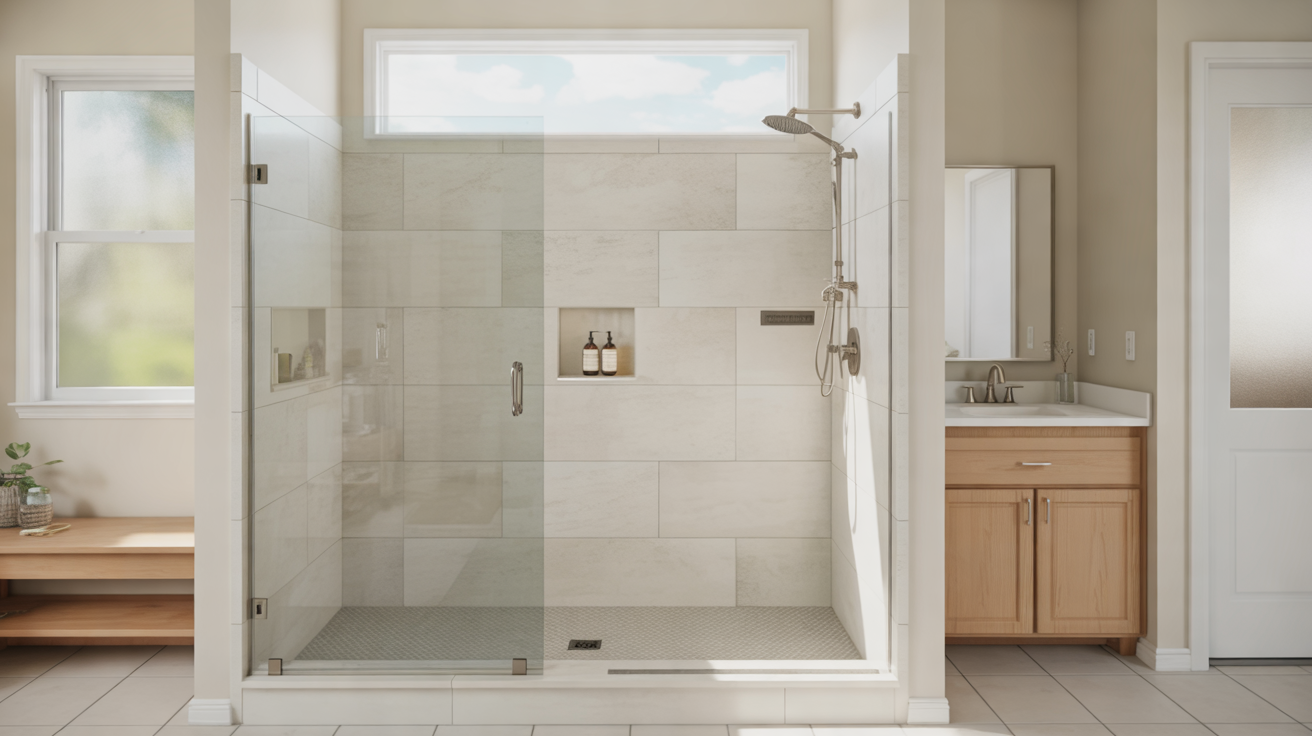
Shower remodel financing options and payment plans make it possible to update your bathroom even if you do not want to pay the full cost upfront. Instead of delaying a needed replacement or safety upgrade, financing can spread the cost into predictable monthly payments that fit your budget.
Below is a clear overview of common ways homeowners pay for a shower replacement, along with pros, cons, and practical steps to choose what works best for you.
Typical Ways to Pay for a Shower Remodel
Most homeowners use a mix of savings and financing. Before you choose, think about three things: how fast you need the project done, how stable your income is, and how long you plan to stay in the home.
1. Paying Cash or Using Savings
Paying in full from savings is the simplest option. There is no application, no interest, and no monthly bill to manage.
- Advantages: No interest charges, no impact on credit, project is fully paid off right away.
- Drawbacks: Ties up a large amount of cash, may reduce your emergency fund, might delay the project while you save.
2. Credit Cards
Some homeowners use an existing credit card or open a new card with a temporary 0% introductory rate.
- Advantages: Fast approval, easy for smaller upgrades, potential rewards or cash back.
- Drawbacks: High interest once promos expire, easy to overspend, minimum payments may stretch out the debt.
Credit cards can make sense for modest projects or finishing touches. For full shower replacements, many people prefer fixed monthly installment plans instead.
Dedicated Home Improvement Financing
Many shower remodels are funded with loans designed specifically for home improvements. These usually offer structured terms and fixed payments.
Personal Home Improvement Loans
Personal loans for home improvement are unsecured loans, meaning they do not require home equity as collateral.
- How they work: You borrow a set amount, receive it as a lump sum, and repay it over a fixed term (often 2–7 years) with a fixed interest rate.
- Pros: Predictable monthly payments, fast funding, no lien on your home.
- Cons: Rates depend on credit score, may be higher than equity-based options, fixed term means higher payment compared to very long loans.
Home Equity Loans and HELOCs
If you have built up equity in your home, you may be able to use it to finance a shower replacement as part of a larger bathroom update.
Home Equity Loan
- Structure: Lump sum loan secured by your home, with a fixed rate and fixed monthly payment.
- Best for: Homeowners who know their project cost and want stable, long-term payments.
HELOC (Home Equity Line of Credit)
- Structure: Revolving line of credit you can draw from as needed, usually with a variable interest rate.
- Best for: Ongoing or multi-stage projects, or when you want flexibility to borrow only what you use.
Because these options are secured by your home, it is important to understand the risks and make sure the monthly payment comfortably fits your budget.
Contractor Financing and Payment Plans
Many shower remodeling companies work with third-party finance partners to offer payment plans directly to homeowners. While specific programs vary by contractor, the general structure is similar.
Types of Contractor-Linked Financing
- Installment loans: Fixed interest, fixed monthly payments over a set period.
- Promotional plans: Short-term offers such as “no interest if paid in full” by a certain date (always read the fine print).
- Low-payment plans: Longer terms with smaller monthly payments, which increase the total interest paid over time.
Benefits of Using a Payment Plan Through a Contractor
- Application is usually quick and can be done during your in-home estimate.
- Financing and project details are handled in one place, making coordination easier.
- Some plans are designed for a range of credit profiles.
When you speak with a shower remodeling professional, ask them to walk you through the available financing options and show examples of monthly payments at different price points.
Comparing Shower Remodel Financing Options
Use these points to compare the main choices side by side:
| Option | Best For | Key Considerations |
|---|---|---|
| Cash / Savings | Homeowners with strong savings who want to avoid debt | No interest, but reduces cash reserves; may delay project while saving. |
| Credit Card | Smaller projects or short 0% promo offers | Easy to use, but high interest if not paid off quickly. |
| Personal Loan | Mid-sized projects and quick timelines | Fixed payments and term; rate depends on credit profile. |
| Home Equity Loan | Larger remodels when you have home equity | Fixed rate and payment, but secured by your home. |
| HELOC | Flexible or multi-phase projects | Draw what you need; variable rates can change over time. |
| Contractor Payment Plan | Homeowners who want one-stop project and financing | Convenient application; always review total cost and terms. |
How to Estimate an Affordable Monthly Payment
Before you sign any agreement, confirm that the payment works with your budget and other financial goals.
- Review your current monthly cash flow. List your take-home income and regular expenses (housing, utilities, groceries, transportation, existing debts).
- Decide on a comfortable payment range. Many homeowners aim to keep new home-improvement payments within an amount they could still cover if income dropped slightly.
- Ask for multiple quotes. Get at least two or three written estimates from shower professionals. For help comparing scopes and quality, see the guide on how to choose the right shower contractor.
- Check payment examples. When discussing financing, ask the lender or contractor to show sample payments at different terms (for example, 36, 60, or 84 months).
- Include long-term savings. Some upgrades—such as water-saving fixtures discussed in eco-friendly shower upgrades—may reduce utility bills, helping offset part of the payment.
Smart Tips Before You Commit to Financing
- Read all disclosures. Look for interest rate, term length, total of payments, fees, and any prepayment penalties.
- Watch for deferred interest. “No interest if paid in full” plans often charge back interest if you miss the payoff deadline.
- Compare total cost, not just the monthly amount. Longer terms lower the payment but increase the interest paid over the life of the loan.
- Confirm project scope. Make sure your written contract clearly lists materials, fixtures, and any extras (like grab bars or seating). For ideas, see senior-friendly shower upgrades and luxury shower features.
- Ask about change orders. Understand how additional work (like plumbing upgrades or mold repair) would be handled and whether financing can be adjusted.
FAQs About Shower Remodel Financing
Can I finance a small shower upgrade, not a full remodel?
Yes. Many lenders and contractors allow financing for a range of project sizes, from basic fixture changes to full shower replacements. For lower-cost updates, you might also consider lower-commitment options covered in the article on budget shower upgrades.
Does financing affect my project timeline?
In many cases, a financing decision can be made quickly, so your start date is not delayed. Talk with your contractor about how financing approval fits into the overall schedule. You can also review the step-by-step shower replacement process to understand typical timelines.
What if I want to pay off my loan early?
Some loans allow extra payments or early payoff without penalty, which can save on interest. Always confirm prepayment terms with the lender before you sign.
Can financing cover accessibility or safety upgrades?
Yes. Many homeowners use financing to add non-slip floors, grab bars, seating, and walk-in shower conversions. For planning these features, see guides on non-slip shower flooring options and walk-in shower replacement.
Where can I learn more before applying?
To understand project costs and how they relate to possible monthly payments, you can review the shower replacement cost guide. For additional planning help, the questions checklist can guide your conversations with contractors and lenders.