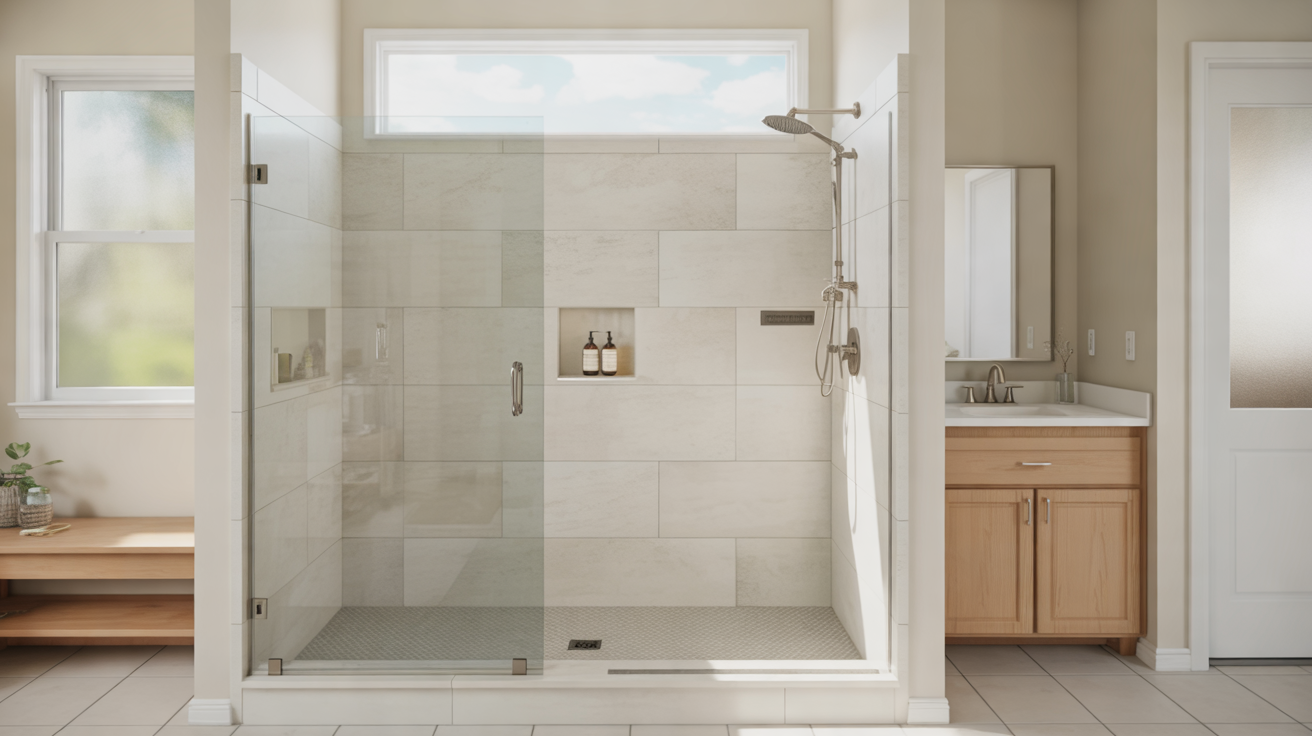
You don’t have to gut your bathroom to get a fresher, more modern shower. With a smart plan and a modest budget, you can make noticeable upgrades that improve how your shower looks, feels, and functions. This page walks through affordable ideas you can tackle in stages, plus tips on when it’s worth talking to a shower replacement specialist.
Where to Start: Set a Realistic Shower Upgrade Budget
Before you buy anything, decide how much you’re comfortable spending and where that money will make the biggest impact.
Simple budget ranges
- Under $150: Focus on cosmetic changes like showerheads, curtains or rods, caulk, and grout refresh.
- $150–$500: Add hardware, storage, lighting, and a higher-quality showerhead or handheld system.
- $500–$1,500: Consider resurfacing walls, swapping doors, or partial panel upgrades. At this point, it’s wise to compare costs with a small professional project.
For ballpark numbers on full replacement and how your budget compares, see the Shower Replacement Cost Guide.
High-Impact, Low-Cost Shower Upgrades
These projects are generally DIY-friendly and can be done over a weekend without changing plumbing or layout.
1. Swap the showerhead for comfort and efficiency
Modern showerheads can make your shower feel brand new for very little money.
- Upgrade to a rain-style or multi-spray head: Gives a spa-like feel without touching the valve.
- Add a handheld shower: Great for rinsing, cleaning the enclosure, kids, and pets.
- Choose efficient models: Pair comfort with water savings; for more efficiency ideas, see Eco-Friendly Shower Upgrades.
2. Refresh caulk and grout
Discolored or cracked lines instantly date a shower. Replacing them is inexpensive but makes a big visual difference.
- Carefully remove old caulk with a plastic scraper or caulk removal tool.
- Clean and dry the areas thoroughly.
- Apply mold-resistant bathroom caulk in a smooth, continuous bead.
- Touch up or re-grout cracked grout lines, then seal once dry.
3. Upgrade the curtain, rod, and liner
If you use a shower curtain, it acts like a large design element in the room.
- Curved rod: Adds elbow room and feels more spacious.
- Weighted or magnetic liner: Helps keep water in and liner in place.
- Color and pattern: Use the curtain to add a modern accent or brighten a dark bathroom.
If you’re debating between curtains and doors, see the comparison on Glass Shower Doors vs Shower Curtains.
4. Replace dated hardware and fixtures
Matching, modern hardware instantly tidies the look of your shower area.
- Swap out old shower trim, handles, and escutcheons (faceplates).
- Coordinate towel bars, hooks, and toilet paper holder with your shower finish.
- Choose finishes that hide water spots, like brushed nickel or matte black.
5. Add affordable storage and organization
Clearing clutter is one of the cheapest ways to make your shower feel upgraded.
- Use corner caddies or tension-pole organizers for bottles.
- Add over-the-door or adhesive hooks for washcloths and loofahs.
- Choose rust-resistant materials made for wet areas.
If you’re planning a future remodel, you can later replace these with built-in niches; see ideas in Luxury Shower Features.
Budget-Friendly Style Updates for Shower Walls and Floors
When your existing shower is sound but looks tired, surface-level updates can stretch your budget.
6. Deep clean and restore surfaces
Before replacing anything, give the shower a thorough cleaning:
- Use a bathroom-safe cleaner to remove soap scum and mineral buildup.
- Remove mildew with a cleaner rated for mold and mildew.
- Polish glass doors with a glass-safe descaling product.
You may be surprised how “new” the materials look once they are truly clean. For long-term care, see How to Clean and Maintain Your New Shower.
7. Use wall panels or liners for a quick face-lift
If tile or fiberglass is stained but still structurally solid, an overlay or wall panel system may be an option. Some products are designed as DIY-friendly panels, while others are better installed by a pro.
- Acrylic or composite panels: Often more affordable than full tile replacement.
- Simple patterns and colors: Keep costs down and appeal broad if you plan to sell your home.
- Low-maintenance options: For ideas, see Low-Maintenance Shower Materials.
8. Improve safety with budget floor upgrades
Safety doesn’t have to be expensive, and it’s often more important than aesthetics.
- Apply non-slip decals or mats on slick shower floors.
- Use a sturdy, water-resistant shower stool if standing is difficult.
- Add grab bars rated for weight-bearing, installed into studs.
For more comprehensive safety planning, explore Senior-Friendly Shower Upgrades and Non-Slip Shower Flooring Options.
Lighting, Ventilation, and Small Comforts on a Budget
Comfort and air quality make a big difference in how your shower feels day to day.
9. Better lighting for a brighter shower
- Switch to bright, warm LED bulbs in vanity or ceiling fixtures.
- Install battery-powered, damp-rated lights in darker corners if hardwiring isn’t in the budget.
- Use dimmable bulbs or smart switches to adjust mood and energy use.
When you’re ready for wired upgrades, see Shower Lighting and Ventilation Upgrades During Replacement.
10. Simple ventilation improvements
- Run the exhaust fan during every shower and for at least 15–20 minutes after.
- Clean the exhaust fan grille and check that it is actually vented outside.
- Use a small, portable dehumidifier if your bathroom tends to stay damp.
When Is a Full Shower Replacement the Better Value?
At some point, piecemeal upgrades stop making sense. It can be more cost-effective to replace the shower completely instead of continually patching issues.
Signs it may be time to replace rather than refresh
- Soft spots, flexing, or spongy areas in the shower floor or walls.
- Persistent leaks, water stains on nearby walls or ceilings, or mold that returns quickly.
- Outdated layout that doesn’t fit your needs or mobility.
- Cracked base or panels that are hard or impossible to repair.
If you see these issues, review the Step-by-Step Shower Replacement Process and Shower Replacement FAQs to understand what a full project involves.
Stretching Your Budget Further
Even on a tight budget, planning ahead can keep costs under control.
- Prioritize function first: Address leaks, safety, and ventilation before cosmetics.
- Phase your upgrades: Start with quick wins (showerhead, caulk, curtain) and save larger changes (walls, base) for later.
- Keep the same layout: Moving plumbing adds cost quickly; work with what you have if possible.
- Compare DIY vs pro: Some projects are cost-effective to do yourself, but others are safer and longer-lasting when installed by a professional. For help weighing the trade-offs, see DIY vs Professional Shower Replacement.
- Explore financing if needed: If you move beyond simple upgrades into a full remodel, Shower Remodel Financing Options may be useful.
FAQs About Budget Shower Upgrades
How can I make my shower feel new without replacing it?
Combine a new showerhead, fresh caulk and grout, decluttered storage, and a new curtain or cleaned glass door. Together, these changes can dramatically improve the look and comfort of your shower for a relatively small investment.
What should I fix first if I have a limited budget?
Prioritize anything related to leaks, soft spots, or mold. Once the shower is watertight and safe, focus on the items you touch and see daily, such as the showerhead, hardware, and storage.
Are cheap shower upgrades a waste if I plan to remodel later?
Not necessarily. Many low-cost upgrades, like a better showerhead or grab bars, can move with you to a new system or still be useful after a full replacement. Just avoid custom items that won’t work with future plans.
How do I know if DIY work will affect future professional replacement?
Cosmetic DIY changes usually don’t cause issues, but structural or plumbing work can. If you are unsure, review the Shower Replacement Warranties page and consider talking with a pro before altering plumbing, framing, or waterproofing.
Where can I learn more before planning a bigger project?
The blog includes guides on choosing contractors, comparing materials, and understanding timelines. Pages like How to Choose the Right Shower Contractor and Checklist: Questions to Ask Before Booking a Shower Replacement can help you prepare.