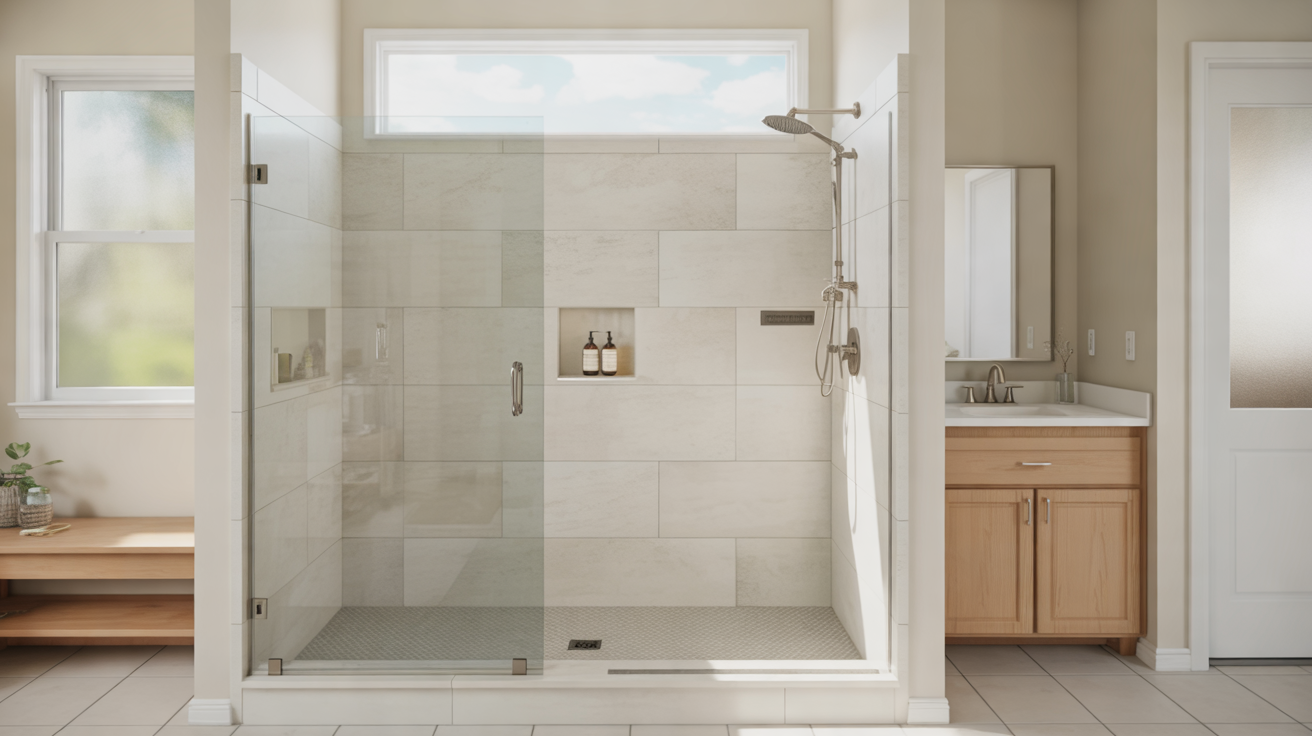
Tile and acrylic are two of the most popular choices for new showers. Both can look great, last for years, and boost the comfort of your bathroom—but they perform very differently in terms of maintenance, cost, and customization. The better choice for your bathroom comes down to how you use the space, your budget, and how much cleaning and upkeep you want to handle.
This guide walks through the main differences between tile and acrylic showers so you can confidently plan your next shower replacement.
Tile vs Acrylic Showers at a Glance
| Factor | Tile Shower | Acrylic Shower |
|---|---|---|
| Appearance | Highly customizable, many sizes, shapes, and layouts | Sleek, simple look with set designs and finishes |
| Cost | Material and labor often higher, especially with custom designs | Usually more budget-friendly overall |
| Installation Time | Longer: layout, cutting, setting, and grouting tile | Faster: prefabricated panels and bases |
| Maintenance | More grout to clean; sealing often required | Low-maintenance, smooth surfaces |
| Durability | Very durable tile; grout and waterproofing must be maintained | Resistant to chips; can scratch, but easy to clean |
| Waterproofing | Depends on proper installation behind tile | Panels and pans are non-porous and water-resistant |
| Resale Appeal | High-end, custom feel when done well | Clean, updated look; less “luxury” than custom tile |
When Tile Showers Are the Better Choice
Tile showers offer nearly unlimited design potential. They are often the go-to choice when you want a custom look or need to work around unusual room dimensions.
Design Flexibility and Style
With tile, you can choose from ceramic, porcelain, stone-look, or mosaic patterns, as well as endless colors and finishes. This makes tile better if you want:
- A spa-style walk-in shower with niches and benches built in
- Decorative borders, accent walls, or herringbone patterns
- A shower that matches existing floor tile or wainscoting
Custom Sizes and Layouts
Tile is easier to adapt to:
- Odd-shaped bathrooms or sloped ceilings
- Larger walk-in showers that exceed standard acrylic kit sizes
- Curbless or low-threshold entries for accessibility upgrades
Potential for High-End Finish
Carefully chosen tile and grout can make your shower feel like a feature, not just a fixture. For homeowners focused on long-term resale value and a more “custom remodel” look, tile often has the edge.
Tile Shower Considerations
Tile does come with trade-offs:
- More maintenance: Grout lines can collect soap scum and mildew, especially in humid bathrooms. Regular cleaning and occasional re-sealing are important. For tips on keeping grout clean, see How to Clean and Maintain Your New Shower for Long-Lasting Results.
- Waterproofing matters: Tile itself is water-resistant, but the real waterproofing is behind the tile. Professional installation is critical to avoid leaks and damage over time. Learn what to expect from a pro job in the Step-by-Step Shower Replacement Process.
- Higher labor costs: Layout, cutting, setting, grout, and trim work require more time and skill than fitting acrylic panels.
When Acrylic Showers Are the Better Choice
Acrylic showers are made from smooth, non-porous molded panels and bases. They are popular in busy households and rental properties because they are simple and practical.
Fast Installation and Less Disruption
Acrylic systems are prefabricated, so they usually go in faster than fully tiled showers. For some projects, especially straightforward replacements, acrylic can align with the kind of compressed timeline discussed in One-Day Shower Replacement: Is It Worth It?.
Easy to Clean and Maintain
The biggest advantage of acrylic is low maintenance:
- Few or no grout lines mean fewer places for mildew to grow.
- Non-porous surfaces wipe clean with mild cleaners.
- Ideal for families who want a “spray and wipe” routine rather than scrubbing grout.
For more low-upkeep options, you can also compare materials in Low-Maintenance Shower Materials That Resist Mold and Mildew.
Budget-Friendly Option
Because acrylic is factory-made and quicker to install, it’s often the more affordable route. If you want a clean, updated shower without going into fully custom territory, acrylic can keep the project within a comfortable budget. To plan costs, check the Shower Replacement Cost Guide.
Acrylic Shower Considerations
Even though acrylic is practical, there are limits:
- Fewer style options: You’ll choose from set colors, textures, and sizes, not custom patterns.
- Surface care: Abrasive cleaners and pads can scratch the surface, so you must use the right products.
- Perceived value: While a new acrylic shower looks clean and modern, it may not provide the same “luxury upgrade” feel as a high-end tile installation.
How to Decide: Key Questions to Ask Yourself
If you’re still torn between tile and acrylic, walk through these questions:
- What is my realistic budget?
Tile can be cost-effective in simple patterns, but custom layouts and premium tile add up quickly. Acrylic is typically more predictable in price. - How much time do I want the bathroom out of service?
Tile projects often take longer from demo to final grout cure. Acrylic may get you back to regular use sooner. - How much maintenance am I willing to do?
If you dislike cleaning grout or have limited time, acrylic may suit you better. If you’re comfortable with a regular cleaning routine, tile is manageable. - Is this my “forever home” or a shorter-term stay?
For long-term homes, investing in tile can make sense. For rentals or shorter stays, durable acrylic might be more practical. - Do I have special needs or accessibility goals?
Both systems can be adapted, but tile offers more flexibility for custom benches, niches, and curbless entries. For safety ideas, see Senior-Friendly Shower Upgrades and Non-Slip Shower Flooring Options.
For a broader checklist of what to think about before you commit, review the Questions to Ask Before Booking a Shower Replacement.
Practical Tips for Both Tile and Acrylic Showers
Plan Storage, Seating, and Fixtures Early
Whether you choose tile or acrylic, plan for niches, corner shelves, grab bars, and seating before installation starts. It’s easier to integrate these features from the beginning. For inspiration, explore Family-Friendly Shower Designs for Busy Households and Luxury Shower Features.
Think About Overall System, Not Just Walls
Your shower replacement is a good time to update plumbing, drains, and ventilation so your new tile or acrylic walls perform well over time. Learn more in:
- Shower Drain and Plumbing Upgrades to Do During Replacement
- Shower Lighting and Ventilation Upgrades During Replacement
Choose Professional Installation
Both tile and acrylic require proper waterproofing and support. A professional installer will:
- Inspect framing and subflooring for damage
- Install waterproof backer or systems behind tile
- Properly secure and seal acrylic panels and pans
If you’re considering doing it yourself, read DIY vs Professional Shower Replacement: Risks, Costs and Results to understand the trade-offs.
FAQs: Tile vs Acrylic Showers
Which lasts longer, tile or acrylic?
Both can last many years when installed correctly. Tile itself is highly durable, but grout and waterproofing need periodic attention. Acrylic resists chipping and staining but can scratch if cleaned with harsh products. Longevity often comes down to installation quality and regular cleaning.
Are tile showers more likely to leak?
Not if they’re built correctly. A well-constructed tile shower uses waterproof membranes behind the tile. Problems usually come from shortcuts or aging materials. Acrylic has fewer seams, which can reduce leak points, but it still needs proper sealing at joints, corners, and the base.
Which is better for small bathrooms?
Acrylic is often preferred in small alcove or corner showers because prefabricated units fit tight spaces and keep walls smooth and bright. Tile can also work beautifully in small spaces if you want a specific style or need a custom size. For ideas, see Small Bathroom Shower Ideas: Maximizing Space and Storage.
Can I mix tile and acrylic in the same shower?
Yes. Some projects use an acrylic base for easy maintenance with tile on the walls for style, or vice versa. This hybrid approach can give you the best of both worlds when designed properly.
How do I choose the right contractor for either option?
Ask about their experience with both tile and acrylic systems, request photos of past work, and make sure they explain their waterproofing methods. For additional guidance, review How to Choose the Right Shower Contractor for Your Project and the Shower Replacement FAQs.