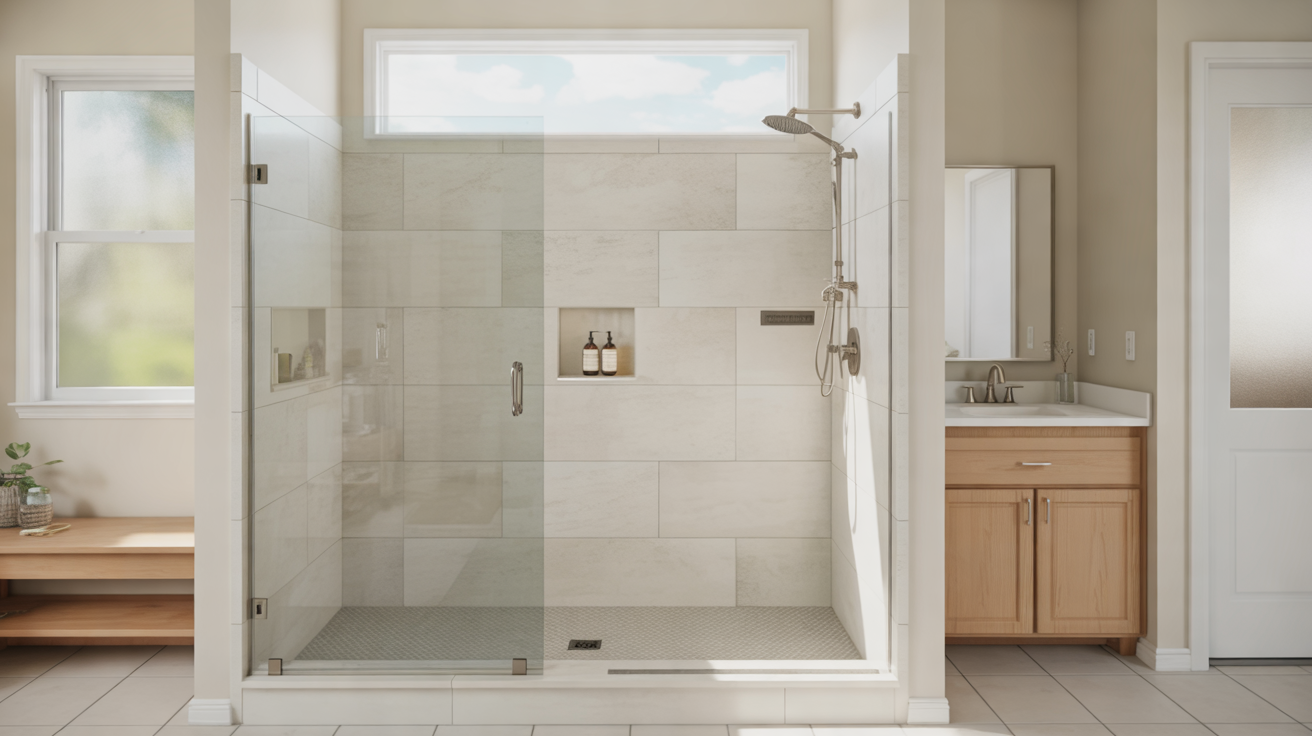
When you plan a shower replacement, choosing the right wall surround is one of the most important decisions you will make. Solid surface, multi-piece panels, and tile all perform differently when it comes to cost, maintenance, style, and long-term durability. The best option for your bathroom depends on how you use the space, how much cleaning you want to do, and your budget for the project.
Main Types of Shower Wall Surrounds
Most modern shower replacements use one of three broad categories for the walls:
- Solid surface systems – seamless or low-seam slabs made from composite materials.
- Panel systems – usually acrylic, fiberglass, or PVC panels installed in two or three pieces.
- Tile – ceramic, porcelain, or natural stone tiles installed over a waterproof backing with grout joints between each tile.
Each has its own feel under hand, installation process, and long-term care needs. Understanding these differences will help you talk confidently with your contractor and compare quotes.
Solid Surface Shower Surrounds
Solid surface surrounds are made from engineered materials (often a blend of resins and minerals) formed into thick, rigid panels. They can be installed as large sheets with minimal seams.
Pros
- Low maintenance: Non-porous and typically installed with only a few caulk joints, so there are almost no grout lines to scrub.
- Durable: Resistant to chips, stains, and swelling from moisture when installed correctly.
- Seamless look: Large panels create a clean, modern appearance that works well in contemporary bathrooms.
- Design options: Available in patterns that mimic stone, concrete, or subtle solids, often with integrated accessories like shelves or niches.
Cons
- Higher upfront cost: Typically more expensive than basic acrylic or fiberglass panel systems.
- Professional installation recommended: The panels are heavy and need precise cutting around plumbing fixtures.
- Repairs can be specialized: Deep damage may require a pro to resurface or replace a panel.
Solid surface walls are a strong choice for homeowners who want a high-end, low-maintenance shower and plan to stay in the home for many years.
Shower Wall Panel Systems (Acrylic, Fiberglass, PVC)
Panel systems use lightweight sheets that lock together or overlap to create a waterproof surround. They are common in both one-day remodels and full shower replacements.
Pros
- Budget-friendly options: Basic acrylic and fiberglass systems can be among the most affordable choices.
- Fast installation: Often installed in a day or two when the plumbing is straightforward.
- Easy cleaning: Smooth, non-porous surfaces wipe down easily, with few seams.
- Lightweight: Good for second-floor bathrooms or older homes where adding heavy tile might be a concern.
Cons
- Appearance varies: Basic units can look more “builder-grade” compared with tile or premium solid surface.
- Scratch sensitivity: Some acrylic and fiberglass panels can scratch if you use abrasive cleaners or tools.
- Fit matters: Poor installation, gaps, or flexing panels can lead to water infiltration behind the walls.
Within the panel category, you will also see products that mimic tile patterns or stone prints. These can give you an upgraded look without the maintenance of real grout.
Tile Shower Surrounds
Tile remains a classic choice and offers the widest range of colors, shapes, and layouts. Ceramic and porcelain are most common; natural stone is sometimes used in higher-end bathrooms.
Pros
- Highly customizable: You can choose tile size, pattern, borders, niches, and accent bands to get a truly personalized shower.
- Timeless style: A well-designed tile surround can complement almost any decor, from traditional to modern.
- Heat and moisture resistant: Quality tile with proper waterproofing underneath performs well in wet areas.
Cons
- More maintenance: Grout lines can stain, discolor, or grow mildew if not sealed and cleaned regularly.
- Longer install times: Tile work is labor-intensive and often takes several days, including drying time.
- Cost variation: Material and labor costs can add up quickly, especially with intricate layouts or premium tile.
Tile is a strong option if you care most about design flexibility and are willing to invest extra time in cleaning and sealing grout.
Side-by-Side Comparison: Solid Surface vs Panels vs Tile
| Factor | Solid Surface | Panels (Acrylic/Fiberglass/PVC) | Tile |
|---|---|---|---|
| Typical Cost Range | Mid to high | Low to mid | Mid to high (wide range) |
| Installation Time | Moderate | Fast | Slow to moderate |
| Maintenance | Very low | Low | Moderate to high (grout care) |
| Style Flexibility | Moderate to high | Moderate | Very high |
| Durability | High | Moderate to high | High with proper waterproofing |
| DIY Friendliness | Low | Moderate | Low |
How to Choose the Right Shower Surround for Your Home
1. Think about who uses the bathroom
- Busy families or rentals: Look for low-maintenance, durable surfaces like solid surface or quality acrylic panels.
- Primary suites: You may prioritize style and upgrade to tile or premium solid surface.
- Seniors or mobility concerns: Combine non-slip flooring and easy-clean walls; you can learn more about safety choices on the Senior-Friendly Shower Upgrades page.
2. Decide how much time you will spend on cleaning
If you want to spend as little time as possible scrubbing, minimize grout lines. Solid surface and panel systems are easier to maintain than tile. For any surround, using the right cleaners and regular wipe-downs helps; see How to Clean and Maintain Your New Shower for step-by-step tips.
3. Match the surround to your budget and project scope
The total cost of your new shower includes demolition, wall repairs, plumbing updates, the pan or base, and the wall materials. To see how wall choices fit into the whole project budget, review the Shower Replacement Cost Guide and Shower Remodel Financing Options.
4. Consider timeline and disruption
If you have only one bathroom or a tight schedule, fast-install options like panel systems may be more practical. For an overview of how long each step takes, see the Step-by-Step Shower Replacement Process and One-Day Shower Replacement pages.
5. Talk with a qualified shower contractor
Your existing framing, plumbing layout, and ventilation can influence which materials make the most sense. A licensed installer can point out issues behind the walls and help you avoid common mistakes; see How to Choose the Right Shower Contractor for what to ask.
Practical Tips for a Long-Lasting Surround
- Start with waterproofing: No matter which finish you choose, proper backing, sealing, and caulking are essential to protect the walls.
- Plan your storage: Built-in niches or corner shelves work differently in panels, solid surface, and tile. Decide where shampoo and soap will go before installation.
- Coordinate with floors and doors: Think about how your wall choice will look with your shower base, flooring, and glass doors or shower curtains.
- Don’t forget lighting and ventilation: Good light and a quiet, effective fan help keep any surround cleaner and brighter; see Shower Lighting and Ventilation Upgrades for ideas.
FAQs About Shower Wall Surround Options
Which surround type is best for low maintenance?
Solid surface and quality acrylic panel systems are usually the easiest to maintain because they have smooth, non-porous surfaces and minimal seams. Tile can last just as long but will need more attention to grout lines over time.
Can I mix materials, like tile accents with panels?
In many projects, you can. For example, some homeowners use solid surface or panels for most of the shower and add a small tiled accent band. Your installer will need to detail transitions carefully to keep everything waterproof.
Do I need to replace the walls if I’m only updating fixtures?
Not always. If your current walls are in good condition and properly waterproofed, you might just replace fixtures. But if you see cracks, soft spots, loose tiles, or signs of water damage, it is safer to update the surround while the plumbing is accessible. The Shower Drain and Plumbing Upgrades guide can help you decide what to do while the walls are open.
How do I avoid mold and mildew on shower walls?
Choose low-porosity materials, keep the bathroom well-ventilated, and clean regularly with appropriate products. Some surrounds naturally resist mold better than others; for more strategies, visit Low-Maintenance Shower Materials That Resist Mold and Mildew.
If you are planning a full shower replacement and want help comparing exact materials, installation methods, and timelines, you can review more resources on the Blog or connect with a professional installer through the site.