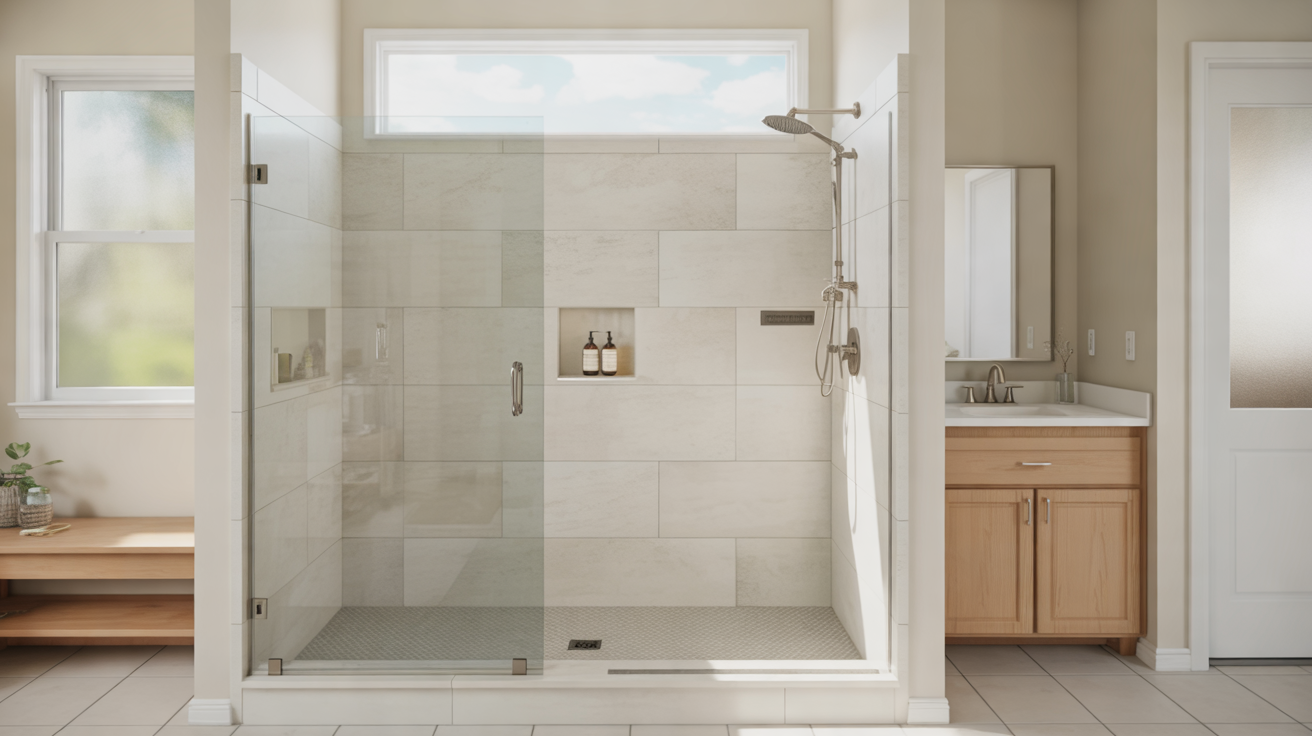
Converting an old bathtub into a walk-in shower is one of the most impactful bathroom upgrades you can make. It can improve safety, free up space, and give your bathroom a cleaner, more modern feel. This guide walks you through realistic costs, timelines, and what to expect at each step so you can decide if a tub-to-shower conversion is right for your home.
Typical Costs for a Tub-to-Shower Conversion
Actual pricing varies by home, materials, and labor in your area, but it helps to understand which choices push costs up or down. For more detail on broader shower pricing, you can also review the Shower Replacement Cost Guide.
Major Cost Factors
- Shower type and size: A basic alcove shower using your current tub footprint usually costs less than enlarging the space or moving walls.
- Wall materials: Acrylic or composite wall panels are typically more affordable and faster to install than custom tile.
- Shower base: A standard acrylic pan is generally less expensive than custom tile floors or low-profile stone bases.
- Plumbing changes: Keeping the drain and fixtures in the same location usually costs less than moving plumbing.
- Glass vs curtain: Frameless glass doors add style but cost more than framed glass or a simple shower curtain setup.
- Condition of existing tub area: Hidden water damage, mold, or structural issues can add repair costs.
- Accessibility upgrades: Grab bars, benches, and non-slip flooring add to your budget but improve safety and long-term usability.
Ways to Control Your Budget
- Choose durable acrylic or composite surrounds instead of full tile.
- Use a shower curtain or framed glass instead of frameless glass.
- Keep plumbing locations the same whenever possible.
- Limit custom niches and built-ins to one or two key areas.
- Address any known leaks or damage early so repairs stay small.
If you are concerned about how to pay for your project, it may help to explore shower remodel financing options and payment plans before you finalize your design.
How Long Does a Tub-to-Shower Conversion Take?
Most standard tub-to-shower conversions are completed in a matter of days once work begins. More complex projects can take longer.
Typical Project Timeline
| Phase | What Happens | Typical Duration |
|---|---|---|
| Planning & design | Measurements, product choices, estimate, scheduling | Several days to a couple of weeks |
| Product ordering | Materials ordered and delivered | Varies by supplier availability |
| Demolition | Remove existing tub, walls, and old plumbing trim | Half day to 1 day |
| Prep & repairs | Inspect for damage, fix framing, address mold or rot | Several hours to 1–2 days, depending on findings |
| New shower installation | Install base, walls or tile, valves, and trim | 1–3 days for typical projects |
| Finishing touches | Doors, caulking, clean-up, final walkthrough | Half day to 1 day |
Some systems are marketed as one-day conversions. Whether that option makes sense for you depends on your bathroom and expectations; you can learn more from the dedicated guide on one-day shower replacement.
For a smooth start, review how to prepare your bathroom for a shower replacement project before your installation date.
What to Expect During Each Step
Knowing what actually happens during a tub-to-shower conversion can reduce stress and help you plan around the work.
1. Consultation, Design, and Estimate
The process starts with a visit to measure your current tub and surrounding area. You will discuss:
- Whether you prefer a walk-in, alcove, or corner-style shower
- Wall materials (tile vs acrylic or other panels)
- Base style and height, including low-threshold options
- Door or curtain preferences
- Storage such as shelves or built-in niches
- Safety features like grab bars, seating, and non-slip floors
If this is your first major shower project, you might find it useful to read through the checklist of questions to ask before booking a shower replacement.
2. Demolition and Removal
On installation day, your old tub, shower walls, and related materials are removed. Expect construction noise and some dust, though pros typically protect nearby areas with coverings. Plumbing is capped as needed and the wall cavity is opened to inspect the condition behind your old tub.
3. Inspecting and Preparing the Space
With the walls open, your installer checks for:
- Water damage in subfloor or framing
- Old leaks or mold that need to be cleaned and treated
- Structural issues that must be corrected before installing the new shower
Any issues are repaired at this stage so your new shower has a solid, dry base. This is also the ideal time to consider shower drain and plumbing upgrades if your system is outdated or problematic.
4. Installing the New Shower Base and Walls
Next, the new shower base is set in place, leveled, and connected to the drain. Wall boards or backer are installed if needed, followed by your chosen wall surface:
- Wall panels: Installed as large sections with sealed seams, often faster and easier to maintain.
- Tile: Applied in multiple steps (setting tile, grouting, and curing time) and typically takes longer.
At this stage, niches, shelves, and any backing needed for future grab bars are put into place. If you are comparing wall materials, take a look at shower wall surrounds: solid surface, panels and tile compared.
5. Fixtures, Doors, and Finishing Details
Once the walls are in, the installer adds the shower valve trim, showerhead, and any handheld shower. Glass doors or enclosures are installed and carefully sealed. Caulking is applied around seams and edges, and everything is cleaned so you can see the final result.
Your installer will do a final check for leaks and proper drainage. They will also walk you through how to use, clean, and maintain your new shower. For long-term care tips, see how to clean and maintain your new shower.
Design and Safety Options to Consider
A tub-to-shower conversion is an opportunity to update your bathroom for both style and accessibility.
Accessibility and Senior-Friendly Features
- Low-threshold or walk-in entry
- Grab bars in strategic locations
- Built-in or fold-down shower seating
- Non-slip flooring for safer footing
- Lever-style handles that are easier to operate
If you are planning to age in place or have mobility concerns, the guide to senior-friendly shower upgrades covers these in more depth.
Style and Storage Improvements
- Built-in niches for bottles and soap
- Corner shelves or ledges
- Glass door styles that make the room feel bigger
- Coordinated fixtures and trims in your preferred finish
- Lighting and ventilation updates to keep the space bright and fresh
For families or smaller bathrooms, you may also want to explore family-friendly shower designs and small bathroom shower ideas for additional layout and storage inspiration.
Common Questions About Tub-to-Shower Conversions
Will removing my only bathtub hurt my home’s value?
Many homeowners prefer at least one bathtub in the house, especially families with small children. If your home has multiple bathrooms, converting a secondary tub to a shower is usually a safe choice. If it is your only bathroom, consider a walk-in shower that is attractive to a wide range of buyers or keep a tub-shower combo. The article on walk-in showers vs tub-shower combos can help you compare options.
Can a conversion really be done in one day?
Some systems and simpler bathrooms can be converted very quickly, especially when using pre-fabricated bases and wall panels and when no major repairs are needed. More complex layouts, extensive tile work, or hidden damage will extend the schedule. The one-day replacement guide explains when fast timelines are realistic.
How do I choose the right contractor?
Look for clear communication, detailed written estimates, and experience specifically with tub-to-shower conversions. Ask about permits, cleanup, and how they handle unexpected issues like water damage. For a structured approach, see how to choose the right shower contractor.
What about warranties and future maintenance?
Different products and installers offer different levels of warranty coverage. Ask what is covered, for how long, and what can void coverage. For more detail, review shower replacement warranties and what they really cover, along with the dedicated shower replacement FAQs.
Next Steps
A tub-to-shower conversion combines better safety, easier cleaning, and a fresher look in the space you use every day. Take time to define your must-haves, set a realistic budget, and ask plenty of questions up front. When you are ready to move forward or want more information about Shower Replacement Port St. Lucie, you can learn more about the company or explore additional resources on the blog.